Ready to Get Your Money Back From the IRS?
Bring us up to 3 years of past taxes and we’ll find ways to save you money, when we do we’ll help you file to get your money back from the IRS.
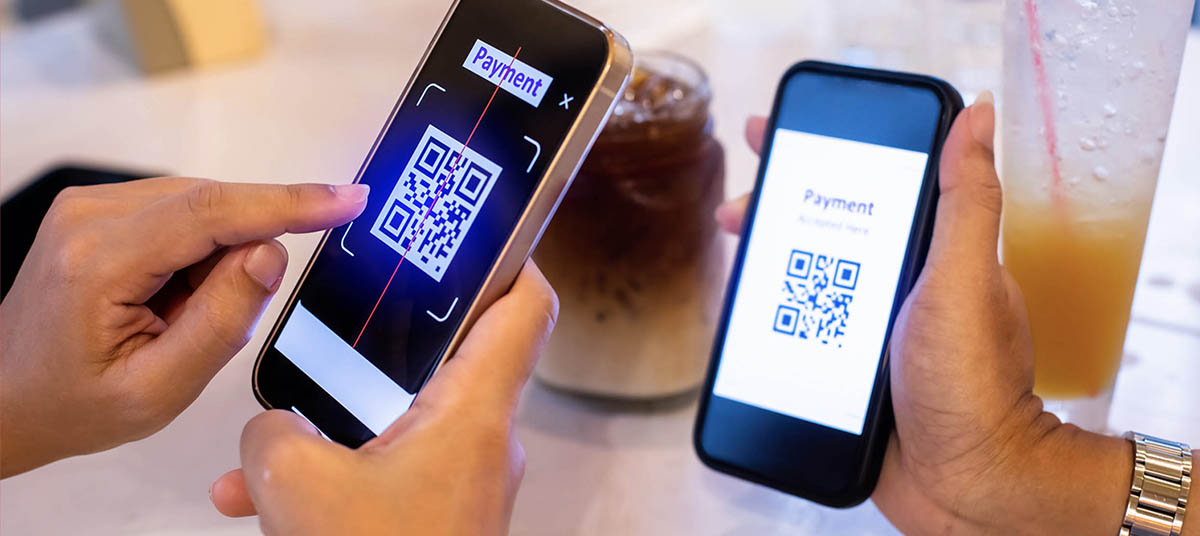
Businesses that accept payments through online marketplaces and digital payment applications have navigated a constant stream of changes regarding Form 1099-K reporting. Now, a critical component of this reporting and withholding architecture has been formally finalized, bringing much-needed clarity—and specific compliance responsibilities—to business owners.
On August 10, 2026, the Department of the Treasury and the IRS officially released the final regulations governing backup withholding on transactions processed through third-party settlement organizations, commonly referred to as TPSOs. These updated regulations successfully align current backup-withholding rules with the restored Form 1099-K reporting thresholds for third-party network transactions.
Under these finalized rules, payments processed through these platforms generally do not become subject to reporting for this specific backup-withholding framework until a payee crosses two distinct thresholds during the calendar year. A business must exceed both $20,000 in total applicable payments and 200 individual transactions. The newly finalized regulations adopt the proposed regulations from January without any modifications and are effective as of August 10, 2026. However, business owners must understand one foundational concept immediately: the $20,000 and 200-transaction threshold is not an exemption from income tax.
It is vital to distinguish backup withholding from standard, year-end income-tax reporting. Backup withholding is an active mechanism where a payer—in this case, the payment platform—is required to withhold federal income tax directly from reportable payments before they reach the business. This measure is typically triggered when required taxpayer-identification information, such as a Taxpayer Identification Number (TIN) or Employer Identification Number (EIN), is missing, incorrect, or mismatched.
For modern businesses receiving client payments through online platforms, an incorrect or missing TIN is no longer just an administrative oversight; it is a direct threat to daily cash flow. The final regulations establish a clear timeline and structure for when third-party network payments must enter this backup-withholding system, making proactive compliance essential.
The final rules stipulate that the TPSO must look at whether the merchant or payee has exceeded both the dollar volume and the total transaction count before backup withholding requirements apply. The regulations published in the Federal Register illustrate this dual-threshold rule with a specific scenario: a payee who processes 201 transactions that total exactly $20,000.01.

The exact transaction that pushes the business past both of these thresholds simultaneously is the catalyst that can trigger backup withholding, provided the other underlying criteria—such as a mismatched TIN—are present. This operational mechanic underscores why maintaining highly accurate taxpayer-identification records is incredibly important for high-volume online sellers and businesses that operate near these thresholds.
One of the most persistent and dangerous myths surrounding payment platforms is that if you do not receive a Form 1099-K, the income is not taxable. This is a fundamental misunderstanding of tax law. Information-reporting thresholds exist solely to dictate when a payment platform is legally obligated to generate and submit a form to the IRS and the taxpayer. They have absolutely no bearing on whether the underlying revenue constitutes taxable business income.
For example, a consultant who earns $10,000 in taxable business income paid entirely through digital platforms must report and pay taxes on that income, regardless of the fact that the payment platform did not issue a Form 1099-K. Businesses should never rely on the presence or absence of a Form 1099-K as their default bookkeeping method. The IRS's 2026 information-return instructions explicitly confirm that while TPSO Form 1099-K reporting generally applies once both the $20,000 and 200-transaction thresholds are crossed, other tax and withholding codes operate independently under their own specific rules.
A well-run business must possess the internal bookkeeping capability to calculate its gross receipts independently of any reports generated by PayPal, Venmo, or Stripe. This independence is especially critical because modern payment processors handle far more than simple, straightforward taxable transactions.

Your internal accounting records must be robust enough to clearly separate and track distinct financial flows, including:
Because platforms track gross volume differently, the number that ultimately appears on a Form 1099-K may not match the actual taxable profit you report on your tax return. Rather than ignoring the form, businesses must perform a thorough reconciliation between their independent books and the platform's reported figures to ensure absolute accuracy.
The easiest way to prevent unexpected backup withholding is to verify that every payment platform you use has your correct, updated taxpayer-identification information on file. Your official business name, tax classification, and TIN should align perfectly with official IRS records.
Common administrative errors that frequently disrupt this alignment include:
Discovering a registration mismatch late in the calendar year can cause unnecessary automated withholding or complex reporting issues that are difficult to undo.
The final regulations contain a specific, nuance-heavy rule that affects subsequent years for payees who had reportable third-party network payments in the preceding tax year. Consequently, evaluating your withholding risk requires looking beyond just the current year's transactional activity.
For organizations with consistent, high-volume activity across digital marketplaces and payment systems, verifying tax-information accuracy must become a standard, recurring part of internal accounting and compliance controls rather than an afterthought.
If your company routinely receives business revenue via PayPal, Venmo, Stripe, online marketplaces, or similar third-party settlement networks, you should take several immediate steps:
The newly finalized regulations bring structural certainty to how payment platforms must handle withholding duties. However, they do not alter the core tax truth that businesses are required to report and pay taxes on all earned taxable income.
If your business processes a significant volume of transactions through payment platforms, please contact our office. We can assist in reviewing your 2026 platform accounts, verifying your tax-identification information, and reconciling your records before year-end, ensuring any discrepancies are fully resolved before annual information returns are issued.
Sign up for our newsletter.
Bring us up to 3 years of past taxes and we’ll find ways to save you money, when we do we’ll help you file to get your money back from the IRS.
 |  |  |  |  |
See how we can help you today!