Ready to Get Your Money Back From the IRS?
Bring us up to 3 years of past taxes and we’ll find ways to save you money, when we do we’ll help you file to get your money back from the IRS.
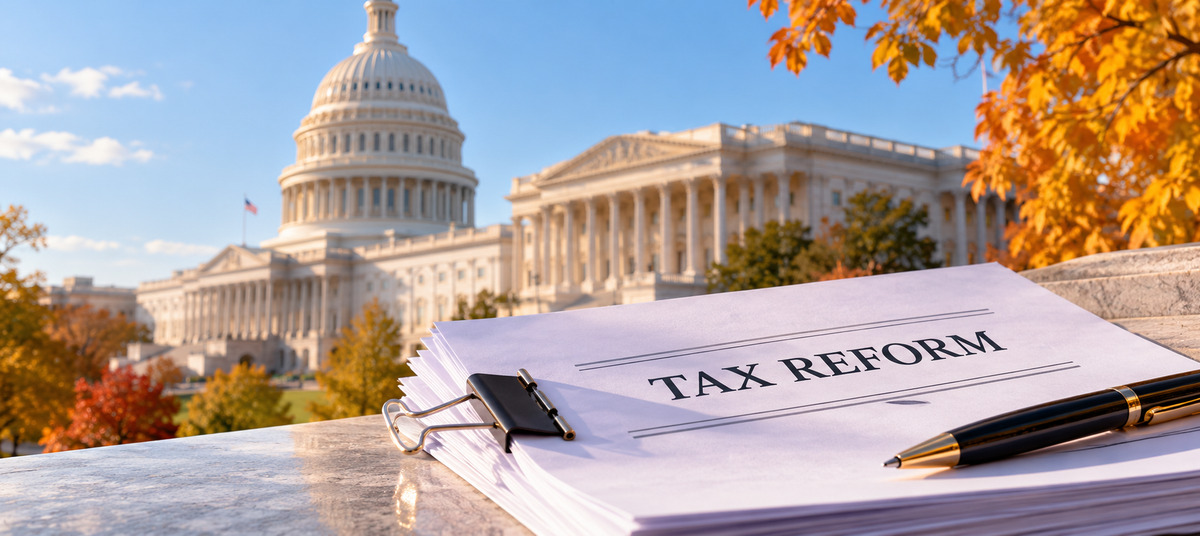
Capitol Hill has maintained a period of relative quiet regarding tax legislation in recent months. However, that calm does not indicate that lawmakers have concluded their tax policy work for 2026.
Following substantial tax legislation in 2025, Congressional interest in passing another major tax package earlier this year was muted. Lawmakers primarily directed their focus toward legislative implementation, upcoming elections, federal budget negotiations, and competing statutory priorities.
As the legislative calendar progresses, attention is shifting toward the upcoming lame-duck session—the period between the November midterm elections and the convening of the new Congress in January. While a comprehensive tax overhaul is improbable, tax professionals and business leaders are evaluating whether Congress will utilize this window to enact a smaller collection of targeted tax provisions, technical corrections, and administrative reforms.
Every two years, national elections take place in November, but incoming lawmakers do not assume office until early January. During the interim period, the current Congress can continue conducting legislative business through the conclusion of its official term, a timeframe referred to as the lame-duck session.
This year's post-election session carries added significance due to unresolved fiscal deadlines. Federal government funding is scheduled to expire in December, requiring Congress to engage in budget negotiations before the end of the year. These comprehensive spending packages frequently serve as vehicles for attaching tax measures that might not pass as standalone bills.

Any potential year-end tax legislation will look distinct from the broad tax extender bills considered in past legislative cycles. This shift is largely attributable to a reduction in the number of expiring temporary tax provisions.
Statutory modifications introduced by the Tax Cuts and Jobs Act and subsequent legislation established permanent status for several provisions or shifted their expiration dates. Former House Ways and Means majority tax counsel Marc Gerson noted in Tax Notes that any 2026 tax extender package will consequently be more constrained in scope than historical predecessors. The ultimate advancement of even a modest package remains contingent upon political dynamics and attendance following the election.
Rather than enacting sweeping changes to individual and corporate income tax structures, active discussions center on targeted policy adjustments. Potential items include traditional tax extenders, technical amendments to existing statutes, digital-asset reporting standards, and operational improvements for internal tax administration.
Certain administrative initiatives have already advanced through the Senate. On September 30, the Senate unanimously passed the Taxpayer Assistance and Service (TAS) Act, a bipartisan proposal featuring 65 provisions intended to modernize Internal Revenue Service operations, bolster taxpayer protections, and improve administrative procedures. This legislation awaits consideration by the House, which is scheduled to return in November, positioning it directly within the lame-duck session.
Recent legislative actions demonstrate that targeted tax measures can achieve broad congressional consensus. In September, President Trump signed the Doug LaMalfa Federal Disaster Tax Relief Certainty Act, which extended favorable tax treatment for specified federally declared disaster losses and wildfire relief payments.
The disaster tax bill passed the House via voice vote and cleared the Senate by unanimous consent. While this result does not guarantee similar outcomes for other proposals, it illustrates that narrow, bipartisan tax measures maintain a viable path through Congress even when broader legislative appetite is limited.

Tax legislation will compete directly with other high-priority matters during the year-end session. Congress must address government funding before current appropriations expires in December, while also navigating decisions regarding defense authorizations and other statutory obligations. Discussions concerning the federal debt limit may also re-emerge during this period.
Consequently, pending tax measures will form one component of a broader legislative resolution. Whether specific tax provisions are enacted may depend as much on political compromises within spending bills as on the merits of the tax policies themselves.
From a planning perspective, close monitoring remains the primary course of action. Taxpayers should not base current structural decisions on the assumption that major tax legislation will pass, as pending proposals may undergo significant revisions or stall entirely.
At the same time, businesses should recognize that current statutory provisions may still be subject to late-year modification. Historically, year-end legislation has introduced last-minute rule changes that require immediate integration into filing-season strategies. Narrow provisions can alter deduction calculations, eligibility for credits, compliance reporting, and administrative workflows. Maintaining proactive communication with tax advisors as December approaches ensures readiness for any statutory adjustments.
While Congress may lack appetite for major tax reform in 2026, tax policy changes remain possible before year-end. Legislative activity will focus primarily on targeted corrections, expiring provisions, and administrative IRS reforms capable of securing bipartisan support in a divided legislature.
The key determinant will be the political landscape following the November 3 election. As lawmakers return to Washington under impending spending deadlines, even a quiet year for tax policy could deliver meaningful adjustments. Contact our team to review your proactive tax planning strategies and prepare your organization for potential year-end updates.
Sign up for our newsletter.
Bring us up to 3 years of past taxes and we’ll find ways to save you money, when we do we’ll help you file to get your money back from the IRS.
 |  |  |  |  |
See how we can help you today!